
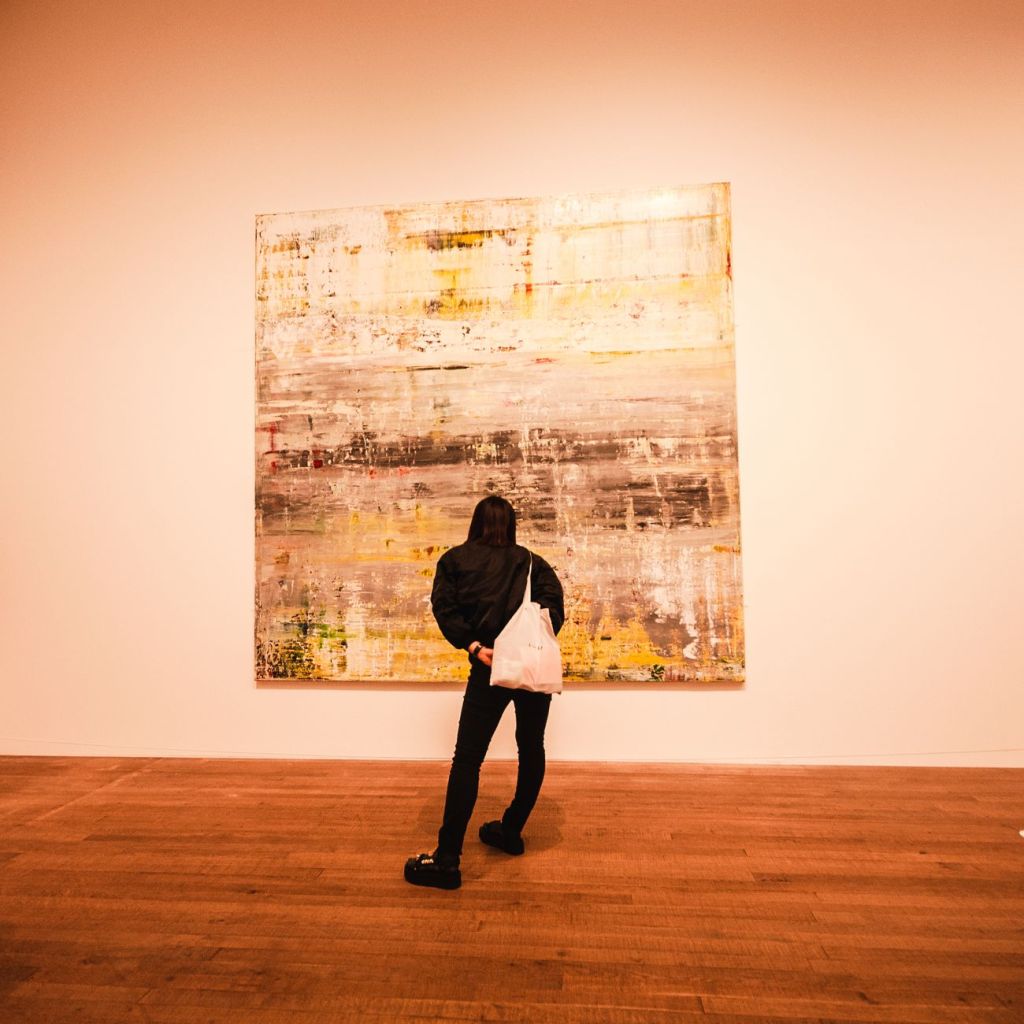
You don’t need an art degree, a studio, or an impressive knowledge of art history to develop a good eye for art.
Having an eye for art isn’t about knowing which artist is important, recognizing every art movement, or explaining why a particular painting belongs in a museum.
It begins with something much simpler:
Learning how to look and notice what truly moves you.
Why does one painting make you stop while another doesn’t? Why do you keep thinking about a certain photograph long after you have seen it? Why are you drawn to handmade pottery with uneven edges, an old building with weathered walls, or a particular combination of colors?
Those small reactions are where your artistic eye begins.
And like any other skill, it becomes stronger the more you use it.
1. Start by Looking Longer
We scroll through photographs, advertisements, interiors, artwork, and videos, often giving each image only a few seconds of attention.
We see hundreds of images every day.
Art asks us to do something different.
It asks us to slow down.
The next time a piece of art catches your attention, resist the urge to move on immediately. Give it a little more time.
Ask yourself:
What did I notice first?
Was it the color? The subject? The texture? The light? The composition?
How does the piece make me feel?
And perhaps most importantly:
Why did I stop?
You don’t need an intellectual or sophisticated answer.
“I love the quiet blue in this painting” is enough.
“This sculpture makes me slightly uncomfortable, but I want to keep looking at it” is enough too.
Learning to recognize your own reactions is one of the first steps toward developing an eye for art.
2. Look Beyond What Catches Your Eye — Find What Draws Your Heart
It is easy to notice the artwork that catches your eye.
Bold colors, dramatic compositions, unusual shapes, intricate details, or large-scale works naturally demand attention.
But there is an important difference between the work that catches your eye and the work that stays with your heart.
Sometimes the piece that affects you most is not the one you noticed first.
It may be a quiet painting hanging in the corner of a gallery. It may be a small ceramic piece, a simple photograph, a delicate textile, or a sculpture whose meaning you cannot completely explain.
You walk away.
Then, somehow, you find yourself thinking about it again.
That feeling matters.
When you visit a museum or gallery, notice not only which work attracts you immediately, but also which one you want to return to before you leave.
Ask yourself:
Which piece am I still thinking about after I have walked away?
Developing an eye for art is not only about learning to recognize beauty, skill, technique, or composition.
It is also about learning to recognize connection.
So don’t only look for the artwork that catches your eye.
Look for the one that draws your heart.
Over time, learning to recognize that difference can tell you more about your own artistic taste than any list of famous artists ever could.
3. Stop Asking, “Is This Good Art?”
Many people feel intimidated by art because they believe there must be a correct opinion.
There isn’t.
A famous painting can leave you completely unmoved, while a small piece by an unknown local artist may stay in your mind for years.
Instead of immediately asking:
“Is this good art?”
Try asking:
What is happening here?
What am I responding to?
How does this make me feel?
Would I want to see this again?
There is no need to agree with a critic, a curator, a friend, or even the person standing beside you.
Your response belongs to you.
Over time, you may begin to notice patterns.
Perhaps you consistently prefer strong lines and simple compositions. Maybe you love muted colors, expressive brushwork, handmade textures, unusual materials, or objects that show traces of the person who made them.
That is your personal taste beginning to take shape.
4. Notice Art Outside of Museums
You don’t have to visit a museum to practice seeing art.
Artistic decisions surround us every day.
Look at the shape of a chair in a coffee shop.
Notice how morning light falls across your kitchen table.
Pay attention to the typography on a beautiful package, the colors of an old storefront, the pattern of shadows on a building, or the way someone arranged flowers on a table.
Look closely at handmade objects too — ceramics, textiles, jewelry, woodwork, metalwork, baskets, furniture, and everyday objects that have been thoughtfully designed.
Even nature can train your eye.
Look at the unexpected colors inside a flower, the irregular shape of a stone, the layers of clouds before rain, or the changing color of a tree throughout the seasons.
The more you notice these things, the more naturally you begin to recognize relationships between color, proportion, texture, balance, light, and space.
Eventually, you begin to see rather than simply look.
5. Visit Galleries Without Trying to Understand Everything
Walking into a gallery can feel intimidating when you don’t know much about art.
But you don’t need to understand every piece.
Try walking through an exhibition once without reading any labels.
Notice which works naturally pull you toward them.
Choose one or two and spend a little more time looking.
Only afterward, if you’re curious, read about the artist, the materials, and the ideas behind the work.
This simple exercise helps you form your own response before someone else tells you what you are supposed to think.
Museums are wonderful, but don’t overlook smaller galleries, university exhibitions, art fairs, craft shows, open studios, and local artist events.
Sometimes encountering art in a smaller, quieter setting makes it easier to slow down and truly look.
6. Learn a Little — But Don’t Turn Art Into Homework
Knowing something about art history, materials, and techniques can deepen your appreciation enormously.
Once you understand how watercolor behaves differently from oil paint, how ceramics are fired, how a print is made, how fibers are woven, or how a sculptor works with wood, stone, or metal, you start noticing things you previously missed.
But you don’t need to study everything.
Follow your curiosity.
If a painting fascinates you, look up the artist.
If you love Japanese ceramics, learn a little about them.
If contemporary sculpture confuses you, spend some time discovering how a few sculptors think about their work.
Knowledge should help you look more closely.
It should never make you afraid of having the “wrong” opinion.
7. Pay Attention to What You Keep Coming Back To
Personal taste often reveals itself slowly.
Save images of artwork, interiors, objects, architecture, colors, or textures that catch your attention.
Keep them in a folder on your phone, a Pinterest board, a notebook, or even an old-fashioned scrapbook.
After a few months, look through what you have collected.
You may be surprised by what you find.
Certain colors may appear again and again.
Perhaps you repeatedly choose organic shapes, bold graphic compositions, quiet landscapes, minimalist ceramics, weathered surfaces, or heavily textured materials.
These patterns tell you something about the way you see beauty.
More importantly, notice the pieces you continue thinking about.
Something that impressed you for five seconds may disappear from your memory. Something much quieter may remain.
That distinction is important.
Your taste is not simply what attracts your attention. It is what continues to speak to you.
8. Don’t Let the Price Tag Tell You What to Like
Price and personal connection are two very different things.
An expensive artwork is not automatically meaningful to you, and an affordable piece is not less worthy of your attention.
Before asking what an artwork costs, try asking yourself:
Would I still be thinking about this tomorrow?
Does it make me curious?
Would I enjoy living with it?
Do I feel something when I look at it?
Those questions can tell you much more about your relationship with art than the price tag can.
If you eventually decide to purchase original art, knowing your own taste can also help you make more thoughtful choices instead of simply following trends or buying what someone else says is valuable.
Learning to recognize value for yourself is part of developing confidence in your own eye.
Try This: A Simple 7-Day Art Eye Challenge
You can begin training your eye without buying anything or knowing anything about art history.
For one week, try paying attention differently.
Day 1 — Find Beauty at Home
Choose one object in your home that you find beautiful. It doesn’t need to be art. Ask yourself exactly what you like about it.
Day 2 — Notice Color
Find an interesting color combination somewhere in your everyday surroundings. Take a photo if you’d like.
Day 3 — Look for Three Minutes
Choose one artwork and look at it for three full minutes without reading anything about it.
Day 4 — Notice Texture
Pay attention to wood, fabric, stone, metal, paint, ceramic, paper, or something from nature.
Day 5 — Study a Space
Look carefully at a restaurant, café, store, garden, or public space. What makes it feel peaceful, elegant, energetic, warm, or uncomfortable?
Day 6 — Discover Someone New
Find an artist whose work you have never seen before. Don’t worry about whether the artist is famous. Simply choose the piece you respond to most.
Day 7 — Follow Your Heart
Visit a gallery, museum, art fair, local exhibition, or online museum collection.
Look around first.
Then ask yourself:
Which piece caught my eye?
And afterward:
Which piece stayed with me?
They may not be the same one.
At the end of the week, ask yourself one final question:
What did I notice this week that I probably would have ignored before?
That is how your eye begins to change.
Your Eye for Art Is Already There
Developing an eye for art isn’t about becoming an expert.
It is about becoming more observant, more curious, and more confident in your own response.
The more you look, the more you notice.
The more you notice, the more clearly you understand what moves you.
And eventually, something interesting happens.
You stop needing someone else to tell you what you should like.
You begin to trust your own eye — and your own heart.
That ability can change much more than the way you look at paintings.
It can influence the objects you bring into your home, the places you enjoy visiting, the things you create, and even the small details you notice during an ordinary day.
Art doesn’t have to be something you occasionally visit in a museum.
It can become part of the way you see everyday life.
Savvy Artist Ledger shares practical ideas for creating, organizing, and living a more artful life. This article is intended for general educational and informational purposes.


Leave a comment