
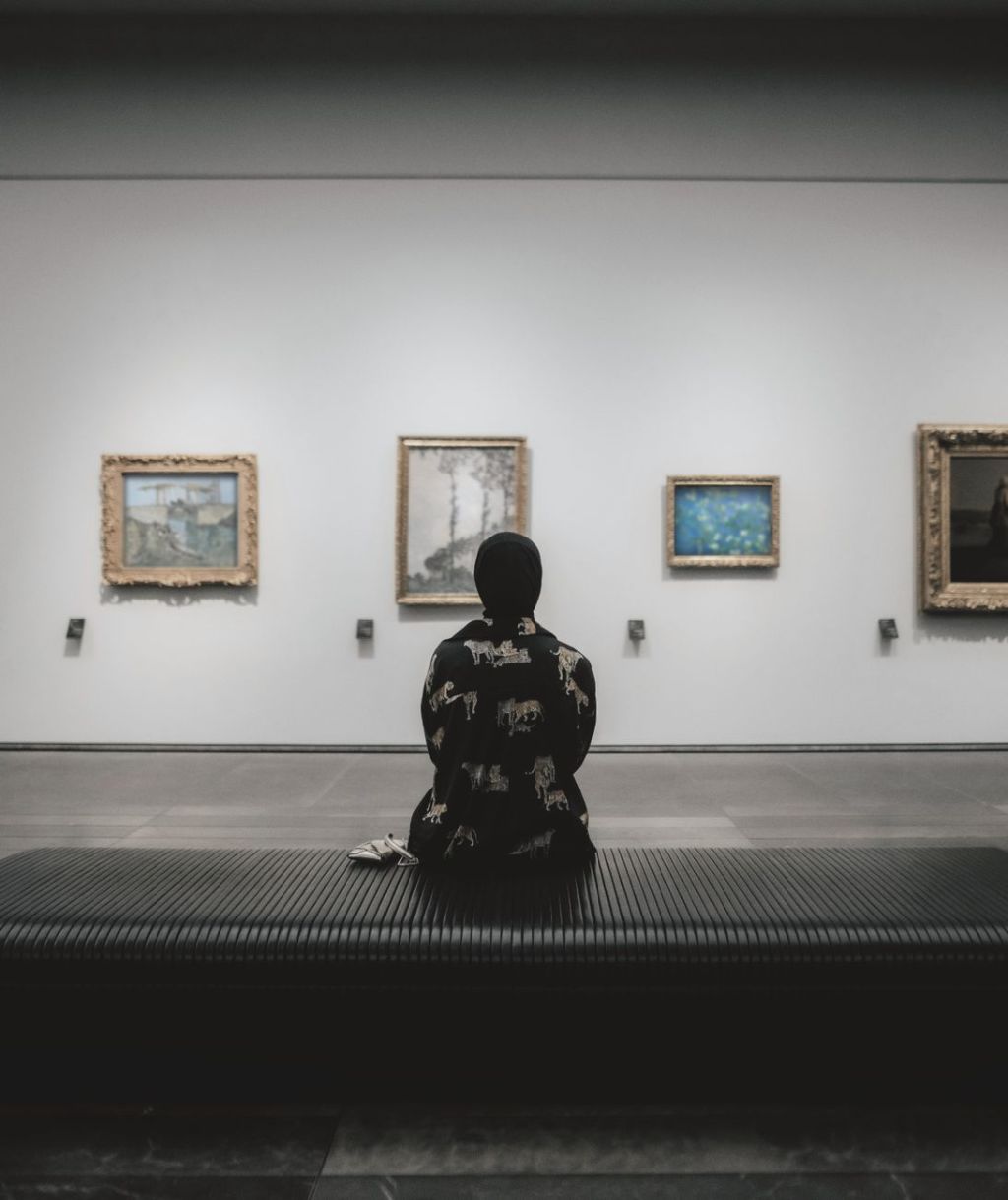
Have you ever walked into a gallery, looked at hundreds of works, and wondered what kind of art you actually like?
For some people, the answer comes quickly. For others, it takes years.
You might love a quiet landscape one day and find yourself drawn to an abstract painting the next. You might admire minimalist interiors but fall in love with richly textured ceramics.
Your taste may even seem inconsistent — and that’s perfectly fine.
Personal taste in art isn’t something you need to decide. It’s something you discover.
And the best way to discover it isn’t by learning what you should like, but by paying closer attention to what you naturally return to.
1. Forget About Finding Your “Art Style”
One of the easiest mistakes is trying to define your taste too quickly.
“I like abstract art.”
“I prefer traditional paintings.”
“I don’t understand contemporary art.”
Labels can be useful, but they can also limit you.
Instead of deciding what category of art you like, allow yourself to respond to individual works.
You might dislike most abstract paintings but deeply connect with one. You may think traditional landscapes aren’t your style until a particular painting reminds you of somewhere you’ve been.
Your taste doesn’t need to fit neatly into an art-history category.
Start with individual connections, and let the pattern reveal itself later.
2. Separate What Impresses You From What Moves You
Some artwork is designed to command attention.
It may be enormous, technically extraordinary, highly detailed, colorful, provocative, or created by a famous artist.
You can admire all of that without actually wanting the piece in your life.
There’s a useful distinction worth making:
“This is impressive.”
and
“I love this.”
are not necessarily the same thing.
When something catches your eye, give yourself time before deciding how much you really like it.
Walk away, look at something else, and notice whether you want to return.
Sometimes the artwork that quietly pulls you back tells you far more about your personal taste than the one that impressed you immediately.
3. Pay Attention to What Stays With You
The art you truly connect with has a strange way of following you.
You may leave a gallery and realize, later that evening, that you’re still thinking about one particular piece — maybe you can’t even explain why.
That matters.
When it happens, ask yourself what exactly stayed with you.
Was it the color?
The mood?
The subject?
The texture?
The simplicity?
The imperfections?
Or was it something harder to describe — a memory or feeling the work awakened?
You don’t always need to understand your reaction immediately.
Sometimes emotional connection comes before explanation, and the art that lingers in your mind may be telling you something about your taste before you have the words for it.
4. Create a Personal Art Collection — Without Buying Anything
One of the easiest ways to discover your taste is to start collecting images — not artwork itself, just what attracts you.
Create a folder on your phone, a Pinterest board, a notebook, or a physical scrapbook.
Save paintings, sculptures, ceramics, textiles, photographs, prints, furniture, architecture, handmade objects, even interesting color combinations.
Don’t overthink your choices.
If something makes you stop, save it.
After you’ve collected twenty, thirty, or fifty images, look at them together and ask:
What keeps appearing?
You may discover your collection leans toward earthy colors, or strong black lines.
Or maybe there are many imperfect handmade surfaces, quiet landscapes, geometric forms, expressive faces, botanical subjects, or simple compositions with lots of empty space.
Without realizing it, you’ve started creating a visual map of your taste.
5. Look Beyond the Subject
Suppose you save five paintings of flowers.
It would be easy to conclude:
“I like floral paintings.”
But look again — maybe it isn’t the flowers you love at all.
Perhaps all five have muted colors and loose brushwork, or strong contrast and dark backgrounds.
The real connection might be color, texture, composition, mood, or technique rather than subject matter.
Try breaking the artwork you like into a few elements:
Color — Bright, muted, earthy, monochromatic, pastel?
Line — Clean, geometric, loose, expressive?
Texture — Smooth, rough, layered, handmade?
Composition — Minimal, crowded, symmetrical, spontaneous?
Mood — Peaceful, joyful, mysterious, dramatic, nostalgic?
Subject — People, landscapes, objects, abstraction, nature?
Once you start looking this way, your preferences become much easier to recognize.
6. Notice What You Don’t Like, Too
Your dislikes are surprisingly useful.
When you see something that doesn’t appeal to you, don’t just dismiss it — ask why.
Maybe the colors feel too bright, or the composition feels too busy.
Maybe highly polished surfaces don’t interest you while visible brushstrokes do.
You may prefer quiet artwork to dramatic artwork, or exactly the opposite.
Understanding what you don’t respond to helps define the edges of what you do.
There’s no need to criticize the artwork itself.
You’re simply learning about yourself.
7. Don’t Let Trends Choose for You
Our visual preferences are constantly shaped by what we see online.
Certain colors, artists, interior styles, and types of artwork suddenly seem to be everywhere. After seeing something repeatedly, it becomes hard to tell whether you genuinely love it or have grown familiar with it.
Try asking yourself:
Would I still want to look at this if I’d never seen it on social media?
And if you’re thinking about buying something:
Would I still want this in my home five or ten years from now?
Trends aren’t necessarily bad.
They can introduce you to wonderful artists and ideas.
But your personal taste gets much stronger once you can tell the difference between what’s currently popular and what genuinely speaks to you.
8. Don’t Let the Artist’s Name or Price Influence You Too Early
Try an experiment sometime:
Look at artwork before reading the artist’s name, biography, or price.
Choose the pieces you like first, then learn about them.
You may be surprised by your choices.
A famous name can make us assume something is important.
A high price can make us assume something is valuable.
But neither one can tell you whether you personally connect with the work.
If you eventually begin collecting art, this habit becomes even more valuable.
Learn to recognize your response before you learn the price.
9. See Art in Person Whenever You Can
Screens are wonderful for discovering artists, but they flatten almost everything.
Scale disappears.
Texture disappears.
Subtle colors shift.
And a photo makes the physical presence of an object hard to understand.
Whenever possible, visit museums, galleries, art fairs, university exhibitions, craft shows, and open studios.
And don’t only look at famous work.
Spend time with emerging artists, local artists, ceramicists, printmakers, photographers, textile artists, sculptors, and woodworkers.
Seeing many different kinds of work helps your eye become more flexible, and your taste more personal.
10. Let Your Taste Change
Your taste today doesn’t have to be your taste forever, and that’s one of the pleasures of living with art.
Something you didn’t understand ten years ago may suddenly fascinate you.
Colors you once avoided may begin to feel beautiful.
An artist whose work seemed strange at first may eventually become one of your favorites.
Changing your mind doesn’t mean you had bad taste before.
It means your eye has grown.
Experience changes the way we see, and as we change, the art that speaks to us often changes too.
Try This: The 10-Piece Test
Here’s a simple exercise.
Choose ten artworks you genuinely love.
Don’t worry about whether they match, and don’t choose them because they’re famous, valuable, sophisticated, or appropriate for your home.
Choose only because you’d happily look at them again.
Put all ten images together and study them.
Write down the words that come to mind:
quiet · bold · warm · raw · simple · layered · colorful · imperfect · delicate · dramatic · nostalgic · playful
Look for repeated colors, materials, moods, shapes, and textures.
Then finish this sentence:
“I seem to be drawn to art that feels …”
You don’t have to land on just one word.
And your answer doesn’t have to define you forever.
It’s simply a snapshot of your taste today.
Your Taste Doesn’t Need Anyone’s Approval
Perhaps the most important part of developing personal taste is learning to trust it.
You don’t have to love something because it hangs in an important museum, and you don’t have to dislike something because it’s decorative.
You don’t need to understand every piece that moves you, and you don’t have to explain why you love something before you’re allowed to love it.
Knowledge can deepen your appreciation of art.
Experience can refine your eye.
But personal taste begins somewhere much quieter.
It begins the moment you notice yourself stopping, looking again, walking away, and then wanting to come back.
The artwork that catches your eye may get your attention, but the artwork you keep returning to is often where your personal taste truly begins.
Give yourself permission to discover it slowly.
Because finding your taste in art isn’t really about learning what belongs on your walls.
It’s about learning how you see.
Savvy Artist Ledger shares practical ideas for creating, organizing, and living a more artful life. This article is intended for general educational and informational purposes.


Leave a comment