
A Simple System for Tracking Sold, Exhibited, Loaned, and Consigned Work
Finishing a piece of artwork feels like the end of a long process.
But from an inventory point of view, it is really the beginning of another one.
Once artwork starts leaving your studio — for an exhibition, gallery, art fair, client, collector, or temporary loan — keeping track of it can become surprisingly complicated.
You may remember where everything is when you have ten pieces.
But what happens when you have fifty? One hundred? Or years of finished work?
A piece may be at a gallery on consignment. Another may be hanging in a temporary exhibition. One may have sold but not yet been paid for. Another may have returned from a show and been placed somewhere in the studio.
Without a simple tracking system, it becomes easy to lose track of where your work is and what happened to it.
The solution doesn’t need to be complicated.
You simply need a consistent record of what the artwork is, where it went, why it went there, and what happened next.
1. “Finished” Doesn’t Mean You’re Finished Tracking It
Many artists carefully record a piece when they finish it.
They write down the title, dimensions, medium, year completed, and perhaps the asking price.
Then the artwork leaves the studio.
And the record stops.
But an artwork’s life may continue for years.
A single piece could move from:
Studio → Exhibition → Studio → Gallery → Collector
Each move is part of the history of that artwork.
Your inventory should tell you not only what you created, but also where the artwork is now and where it has been.
2. Give Every Artwork One Permanent ID
One of the simplest ways to avoid confusion is to give every finished artwork a unique inventory number.
For example:
2026-001
2026-002
2026-003
The exact numbering system isn’t important.
Consistency is.
Once you assign an ID to an artwork, keep that same ID for the life of the piece.
Don’t change it because the artwork goes to a different gallery, exhibition, or collector.
An artwork’s title can sometimes change.
Its location certainly will.
But its inventory ID should remain permanent.
This becomes especially helpful when two pieces have similar titles or when you’re trying to locate records from several years ago.
3. Track Current Location — Not Just Ownership
One of the most useful fields in an artist’s inventory is surprisingly simple:
Current Location
That might say:
Studio
Gallery
Exhibition
Art Fair
On Loan
Collector
Storage
But whenever possible, be more specific.
Instead of simply writing:
Gallery
write:
ABC Gallery — Atlanta, GA
Instead of:
Exhibition
write:
Spring Exhibition — City Arts Center
The goal is simple.
If someone asks you today:
“Where is this artwork?”
you should be able to answer without searching through emails, old text messages, shipping receipts, or your memory.
4. Record Every Time an Artwork Moves
Whenever artwork physically leaves your studio, record the movement.
At minimum, keep:
Artwork ID
Title
Date Out
Destination
Reason
Expected Return Date
Actual Return Date
The reason might be:
Exhibition
Consignment
Art Fair
Loan
Photography
Framing
Delivery
This simple habit can prevent a surprising amount of confusion.
It is especially useful when several pieces leave your studio at the same time.
For example, imagine sending twelve works to an exhibition.
Three months later, ten return.
Without a movement record, you may find yourself wondering:
Were twelve actually sent?
Was one sold?
Is one still at the gallery?
Was something left behind?
A simple record gives you the answer.
5. Consigned Is Not the Same as Sold
This distinction is extremely important.
When you send artwork to a gallery on consignment, the gallery usually has possession of the artwork, but the artwork has not necessarily been sold.
Your inventory status should reflect that.
Instead of marking the piece:
Sold
mark it:
Consigned
Then record the gallery and the date the artwork was sent.
If the gallery later sells the piece, update the status to:
Sold
and record the sale information.
If it doesn’t sell and comes back to your studio, change the status back to:
Available
and update the current location.
Keeping these statuses separate helps prevent artwork from disappearing from your available inventory simply because it temporarily left your studio.
6. Exhibited Is Not the Same as Unavailable Forever
Artwork sent to an exhibition may temporarily be unavailable for sale or movement.
But that doesn’t mean it should disappear from your active inventory.
Mark it something like:
On Exhibition
and record:
Exhibition Name
Venue
Date Out
Exhibition Dates
Expected Return Date
If the artwork is available for purchase during the exhibition, you can note that separately.
When the exhibition ends, update the record.
It may become:
Available — Studio
or:
Sold
or perhaps:
Consigned — Gallery
depending on what happens next.
The important thing is that the status follows the artwork.
7. Treat Loans as Real Inventory Movements
Artists sometimes lend artwork to offices, restaurants, designers, friends, organizations, or special events.
Because no sale is involved, these arrangements can feel informal.
That is exactly why they can be easy to forget.
If artwork leaves your possession temporarily, record it.
Include:
Who has it
Where it is
When it left
Why it was loaned
When it is expected back
For longer loans, it may also be helpful to keep any written agreement, condition information, insurance details, or correspondence related to the arrangement.
A friendly loan today can become a difficult memory test two years from now.
8. Don’t Delete Artwork After It Sells
This is one of the most important inventory habits an artist can develop.
When an artwork sells, do not delete it from your inventory.
Change its status to:
Sold
Your inventory isn’t only a list of artwork currently available for sale.
Over time, it becomes a record of your career.
A sold artwork record can preserve information such as:
Artwork ID
Title
Year Created
Medium
Dimensions
Sale Date
Sale Price
Gallery or Sales Channel
Commission
Amount Received
Image of the Artwork
Years later, you may need this information for an exhibition history, retrospective, insurance question, provenance record, portfolio, tax documentation, or simply your own archive.
Once that information is deleted, reconstructing it can be difficult.
9. Keep the Artwork Record and Financial Record Connected
Your studio inventory and bookkeeping records serve different purposes, but they should be able to connect.
Suppose a piece sells through a gallery.
Your artwork record might show:
Artwork ID: 2026-021
Title: Blue Garden
Status: Sold
Sale Price: $2,000
Gallery Commission: $800
Amount Due to Artist: $1,200
Payment Received: Yes
Payment Date: October 15, 2026
Your bookkeeping system would contain the appropriate financial transaction.
The artwork ID or title can help connect the two records.
This doesn’t mean your inventory spreadsheet needs to become your accounting system.
It simply means that when you look at a sale years later, you can understand what sold, where it sold, and what happened financially.
10. Keep an Artwork Movement Log
If your artwork moves frequently, consider keeping a separate Artwork Movement Log in addition to your main inventory.
It can be very simple.
| Artwork ID | Title | Status | Current Location | Date Out | Expected Return |
|---|---|---|---|---|---|
| 2026-014 | Quiet Morning | On Exhibition | City Gallery | Aug. 12 | Oct. 5 |
| 2026-021 | Blue Garden | Consigned | West Gallery | Aug. 25 | — |
| 2026-032 | Stillness | On Loan | Design Office | Sept. 3 | Dec. 15 |
| 2025-038 | Between Seasons | Sold | Private Collection | — | — |
You can create this in Excel, Google Sheets, or whatever system you already use.
You don’t need sophisticated inventory software to begin.
A simple spreadsheet that you actually update is far more useful than an elaborate system you stop using.
11. Create a Quarterly Visual Inventory Sheet
Spreadsheets are excellent for keeping detailed records.
But artists are visual people.
Sometimes the fastest way to recognize a piece isn’t by reading its title or inventory number.
It’s simply by seeing it.
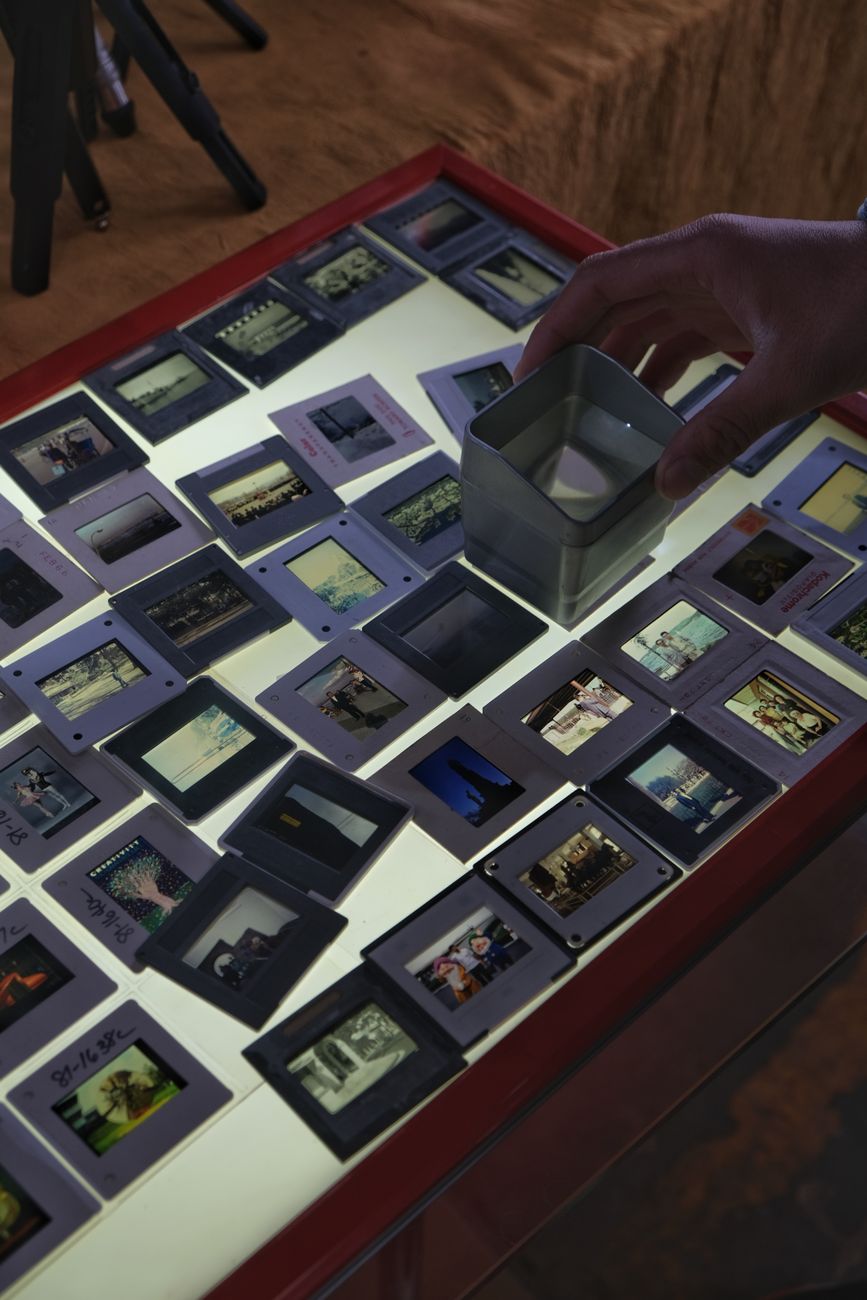
Consider creating a Quarterly Visual Inventory Sheet using small snapshot images of your artwork.
Arrange approximately 20 thumbnail images on each sheet, similar to a contact sheet or an old-fashioned slide sheet.
Under each image, include only the basic information you need to identify the work:
Artwork ID
Short Title
Current Status or Location
You might organize the sheets like this:
January–March 2026
April–June 2026
July–September 2026
October–December 2026
Or simply:
Q1 2026
Q2 2026
Q3 2026
Q4 2026
These don’t need to be professional portfolio photographs.
A clear snapshot is often perfectly adequate for an internal studio record.
The goal is quick visual recognition.
Imagine trying to remember which of twenty similar pieces went to a particular exhibition six months ago.
Reading twenty titles may not immediately help.
Seeing twenty small images probably will.
If you produce more than twenty works in a quarter, simply create additional sheets:
Q2 2026 — Sheet 1
Q2 2026 — Sheet 2
You can create these visual sheets in PowerPoint, Google Slides, Word, Canva, or another simple program you already use.
Save them digitally by year and quarter, and if you prefer paper records, print them and keep them in your studio inventory binder.
Most importantly, don’t think of the visual sheet as a replacement for your inventory spreadsheet.
Think of the two systems as partners.
Your spreadsheet holds the details.
Your visual inventory lets you recognize the work at a glance.
12. Use Your Visual Sheets to See Your Own Progress
There is another benefit to keeping quarterly visual inventory sheets that has nothing to do with locating artwork.
They allow you to see your own development as an artist.
At the end of the year, place your four quarterly sheets together:
Q1 → Q2 → Q3 → Q4
Then look.
You may notice something you didn’t recognize while you were working.
Perhaps your colors gradually changed.
Your compositions became simpler.
Your forms became larger.
A certain subject began appearing repeatedly.
Your materials changed.
Or an idea that first appeared quietly in Q1 became an important part of your work by Q4.
When we work on one piece at a time, these changes can be difficult to see.
But twenty small images viewed together tell a different story.
And several quarters viewed side by side can reveal the direction of an entire year.
Your visual inventory can therefore become more than an organizational tool.
It can become a visual record of your artistic growth.
Years later, those quarterly sheets may give you an extraordinary overview of how your work evolved.
A Simple Habit: Update the Record When the Artwork Moves
The easiest way to keep an inventory accurate is not to rely on memory.
Create one rule:
When the artwork moves, the record moves with it.
If you pack a piece for an exhibition, update the inventory.
If you deliver work to a gallery, update it.
If a gallery returns a piece, update it.
If something sells, update it.
If a loan comes back, update it.
And at the end of each quarter, take a little time to update your visual inventory sheet.
It may take only a few minutes at a time.
But those few minutes can save hours of searching later.
Your Inventory Is More Than a List
A good artwork inventory doesn’t simply tell you how many pieces are sitting in your studio.
It tells the story of where your work has gone.
Which pieces were exhibited.
Which were consigned.
Which came back.
Which were sold.
Which are still available.
And where each piece is today.
Your quarterly visual sheets add another layer to that story.
They let you see what you were making — and how your work was changing — at a particular moment in your career.
As your body of work grows, these records become increasingly valuable.
You shouldn’t have to rely on memory to know where your artwork is or what you created years ago.
Create the work. Give it an identity. Track where it goes. Keep its history. And keep a visual record along the way.
Your future self — and your studio — will be glad you did.
Savvy Artist Ledger shares practical information to help artists organize their studios, artwork records, and finances. This article is for general educational and informational purposes and is not legal, tax, accounting, insurance, or financial advice.


Leave a comment