
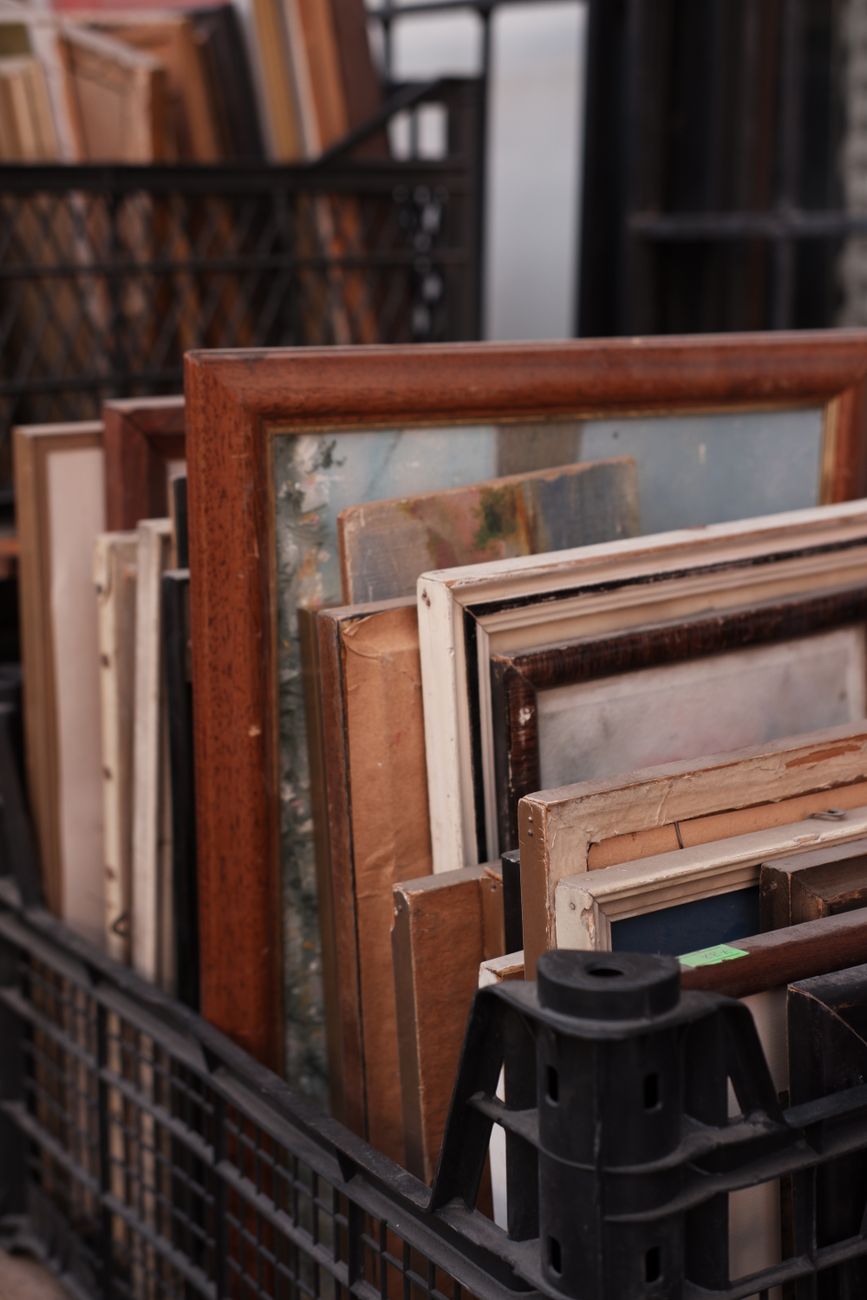
Artists create — and then create some more. Before long, finished paintings lean against walls next to works in progress, photos scatter across your phone, and you’re left asking: When did I make this? Did I already photograph it? What size was it? Which file belongs to this piece?
A simple artwork numbering system solves much of this confusion. You don’t need inventory software or an elaborate filing structure — just one consistent way to identify every piece you create and the discipline to record it.
That small habit, applied consistently, becomes the foundation of an organized studio practice.
1. Assign Every Finished Artwork a Permanent Number
An artwork number functions as a permanent ID. Titles can change, and you may end up with several pieces bearing similar names — but a number stays with the piece for its entire life.
The simplest format is YEAR + SEQUENCE:
2026-001
2026-002
2026-003
The first piece you complete in 2027 becomes 2027-001, and the sequence resets.
Don’t overengineer this. The system only needs to become more complex if your practice actually requires it.
2. Add a Medium Code If You Work Across Several Disciplines
If you work in more than one medium, you can prefix the number with a letter:
P-2026-001 — Painting
S-2026-001 — Sculpture
C-2026-001 — Ceramic
M-2026-001 — Mixed media
Resist the temptation to build ten different codes just because you can.
The right system isn’t the most sophisticated one — it’s the one you’ll actually maintain.
3. Log the Basic Details the Moment You Assign the Number
Numbering the piece is only the first step. When you assign it, spend an extra minute recording the essentials:
Artwork No.: 2026-014
Title: Quiet Morning
Year: 2026
Medium: Oil on canvas
Size: 24 × 30 in.
Price: $1,800
A spreadsheet, notebook, or dedicated inventory app can all work.
What matters is consistency, not the tool.
4. Photograph the Piece Immediately
This is one of the easiest steps to postpone.
You finish a piece and think:
I’ll photograph it later.
Then another project begins, the studio gets busy, and weeks pass.
Build photography into your completion process rather than treating it as a separate future task:
Number it → Photograph it → Record it.
Three simple steps, done in sequence, can save hours of backtracking later.
5. Name Your Photo Files With the Artwork Number
Your numbering system also solves another common problem: hundreds of unlabeled image files.
Instead of:
IMG_4837.jpg
rename the file:
2026-014_Quiet-Morning.jpg
For additional images:
2026-014_Quiet-Morning_detail.jpg
2026-014_Quiet-Morning_framed.jpg
Now your photo library and inventory record speak the same language.
Years later, searching for 2026-014 can quickly bring you back to the images associated with that piece.
6. Let One Number Connect Your Records
The real power of an artwork number is that it gives you one reference point for everything you record about a piece.
Use the same number in your:
- Master artwork list
- Digital photo folder
- Price records
- Artwork notes
- Certificate of Authenticity
- Printed or digital archive
Instead of trying to remember whether Quiet Morning was the 24 × 30 painting or the smaller version with a similar title, just look for 2026-014.
One number keeps the information connected.
And the larger your body of work becomes, the more useful that simple connection becomes.
7. Create One Small Organizing Routine
Organization becomes difficult when we treat it as a separate project.
Someday I’ll organize my studio.
Someday I’ll sort all those photos.
Someday I’ll make an inventory.
Instead, attach organization to something you already do: finishing an artwork.
Before you begin the next piece, take a few minutes to:
Assign the number.
Take the photograph.
Rename the photo file.
Add the piece to your master list.
That’s your routine.
It doesn’t require an afternoon of organizing. It may take only a few minutes.
The goal isn’t to become perfectly organized.
The goal is to stop creating new disorganization.
8. Don’t Try to Back-Catalog Everything at Once
If you’ve been making work for years without a system, cataloging your entire body of work can feel overwhelming.
It doesn’t need to happen all at once.
Start with the next piece you finish:
Number it. Photograph it. Record it.
Then work backward through older pieces at a manageable pace.
Five this week.
Another five next month.
Over time, your archive takes shape without becoming a massive weekend project.
9. Treat It as the Final Step of Finishing a Piece
This habit matters most.
A piece isn’t truly finished when the paint dries or the last stitch is made. Add one small administrative step to your creative process:
Create → Finish → Number → Photograph → Record
Once this becomes routine, it stops feeling like paperwork.
It simply becomes part of how you work.
The Bottom Line
An inventory system feels optional with five finished pieces. It feels essential at 50. At 500, it’s indispensable.
Your body of work reflects years of ideas, experimentation, and growth. Tracking it properly isn’t about turning your studio into an office — it’s about taking care of the work you’ve already created.
Start with the next piece.
Assign a number. Take a photograph. Record a few details.
Then do the same with the next one.
A well-organized art practice isn’t built in a day — it’s built one artwork at a time.


Leave a comment